Oral Rehydration Salts (ORS): How It Works, Mixing Guide, and Safety
Last updated: November 18, 2026
Oral Rehydration Salts (ORS)
Oral Rehydration Salts (ORS) is a measured powder mixture of glucose (sugar) and essential salts—sodium, potassium, and chloride—designed to replace lost fluids and electrolytes during dehydration. When mixed with clean drinking water, it helps the small intestine absorb water quickly, making it the first-line treatment recommended by the World Health Organization (WHO), Centers for Disease Control and Prevention (CDC), and India's Ministry of Health and Family Welfare for mild to moderate dehydration caused by diarrhea, vomiting, or heavy sweating.
Key Takeaways
- How it works: ORS uses a precise ratio of glucose and sodium to pull water rapidly through the intestinal wall into the bloodstream, even during active diarrhea.
- Mixing accuracy matters: Always dissolve one full packet in the exact amount of clean water printed on the label (commonly 1 liter or 200 mL, depending on pack size).
- Plain water is not enough: Plain water lacks electrolytes, while sugary sodas or sports drinks contain too much sugar and too little sodium, which can worsen diarrhea.
- Safe across ages: When mixed properly, standard low-osmolarity ORS is safe for infants, children, pregnant women, and older adults.
- Know the limits: ORS prevents and treats dehydration, but it does not stop diarrhea immediately or cure the underlying infection.
What Is ORS and How Does It Work?
When you have watery diarrhea or repeated vomiting, your body loses more than just water. You also lose vital minerals called electrolytes—primarily sodium, potassium, chloride, and bicarbonate—that keep your nerves, muscles, and heart working properly.
Simply drinking plain water replaces fluid volume, but it does not replace lost salts. Worse, during acute diarrhea, the gut struggles to absorb plain water efficiently. ORS solves this problem through a biological mechanism called sodium-glucose co-transport. Special transporter proteins lining the small intestine carry sodium and glucose across the gut wall together. As sodium and glucose move into the bloodstream, water naturally follows them.
Since 2002, the WHO and UNICEF have recommended a low-osmolarity ORS formula (245 mOsm/L). Compared to older formulas, this balanced mix reduces stool output, lowers the need for intravenous (IV) fluids, and decreases vomiting in children and adults.
ORS vs. Plain Water, Sports Drinks, and Homemade Solutions
Many people reach for sports drinks, fruit juice, or homemade sugar-salt water when feeling dehydrated. However, standard WHO-approved ORS is formulated specifically for medical rehydration, whereas everyday beverages have very different balances of sugar and salt.
| Liquid Option | Sodium & Potassium Content | Sugar Concentration | Best Use Case |
|---|---|---|---|
| WHO-Formula ORS | High, balanced (75 mmol/L sodium; 20 mmol/L potassium) | Low, precise (75 mmol/L glucose) | Dehydration from diarrhea, vomiting, or heat illness |
| Plain Drinking Water | Negligible to none | None | Everyday hydration when not losing electrolytes |
| Commercial Sports Drinks | Low sodium, very low potassium | High sugar (often 6% to 8%) | Light to moderate exercise recovery, not diarrhea |
| Fruit Juices & Sodas | Very low | Very high sugar | Not recommended for illness; high sugar pulls water into the gut and worsens diarrhea |
If commercial ORS packets are temporarily unavailable, health agencies outline a temporary homemade emergency solution: dissolve half a level teaspoon of salt and six level teaspoons of sugar in 1 liter (about 4.2 cups) of safe drinking water. Switch to a commercial WHO-formula ORS packet as soon as possible, as homemade mixes lack potassium and citrate and carry a risk of measuring errors.
How to Mix and Take ORS Safely
Using ORS correctly depends entirely on getting the water-to-powder ratio right. Both over-diluted and over-concentrated mixtures reduce effectiveness or cause harm.
Step-by-Step Mixing Guide
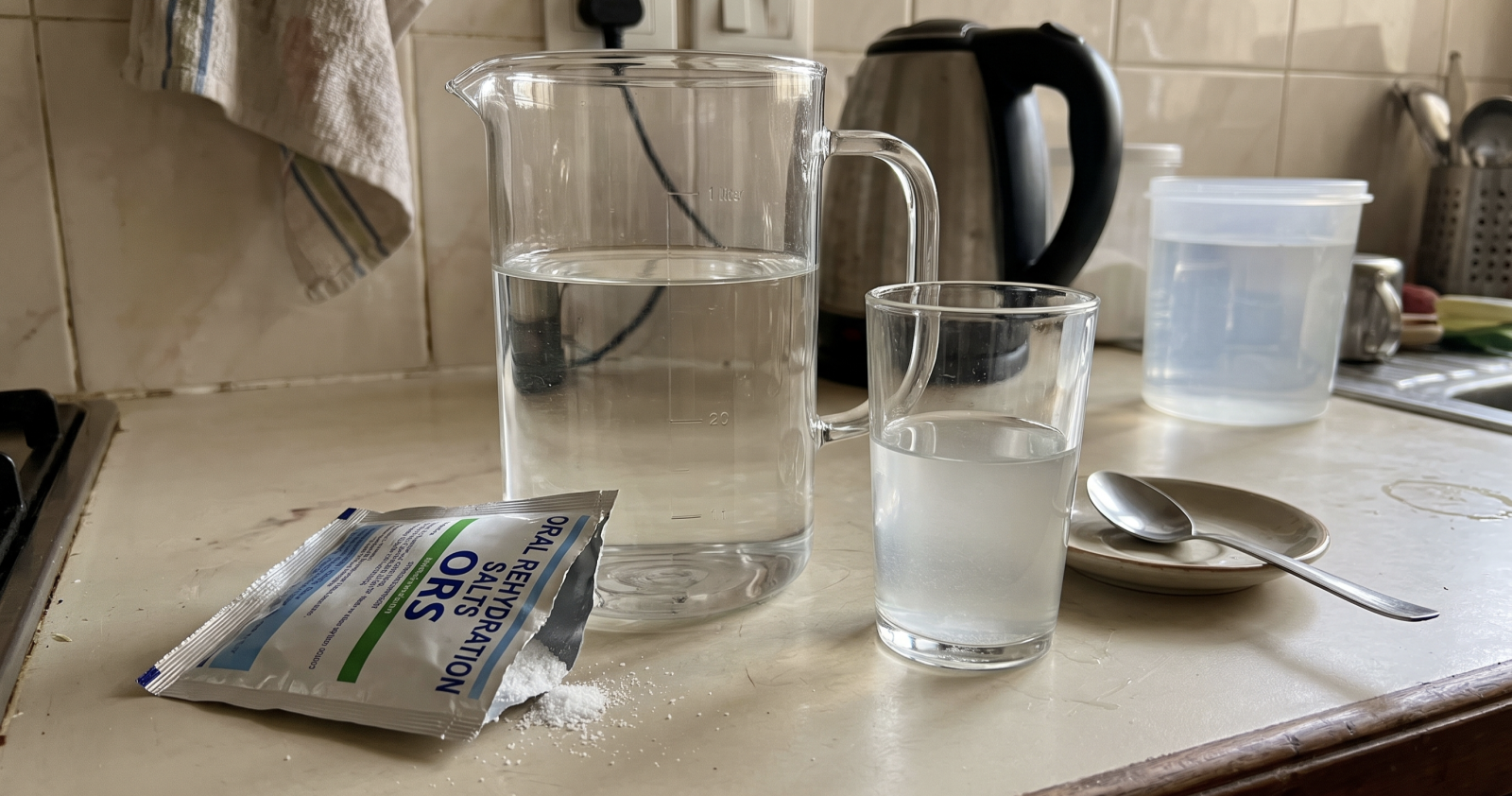
- Check the packet size: In India and many countries, packets are sold in two common sizes: a standard large sachet meant for 1 liter (1,000 mL) of water, and a smaller single-serve sachet meant for 200 mL (one standard glass) of water. Read the label every time.
- Use safe water: Use boiled and cooled water, filtered water, or sealed bottled water. Never mix ORS with milk, soup, fruit juice, or hot water.
- Dissolve completely: Pour the entire contents of the packet into a clean container, add the exact measured amount of water, and stir until the powder dissolves completely. Never split a 1-liter packet into smaller portions by eyeballing the powder.
- Do not add extra sugar or salt: Adding extra sugar, flavorings, or salt alters the osmolarity and can make diarrhea worse.
- Discard after 24 hours: Keep the mixed solution covered at room temperature or in the refrigerator. Throw away any leftover solution after 24 hours and mix a fresh batch if needed.
General Intake Guidelines
According to CDC and WHO guidelines, adults with mild to moderate diarrhea should sip ORS regularly—typically 200 mL to 400 mL (about 1 to 2 cups) after every loose stool, alongside normal fluids and light food. For children and infants, dosing depends on body weight and age; check the packet instructions or consult a doctor or pediatrician for the exact volume to give after each loose stool. If a person is vomiting, give small sips (one teaspoon or 5 mL) every 1 to 2 minutes rather than a full glass at once, as gulping often triggers more vomiting.
Side Effects, Precautions, and Who Should Be Careful
When mixed according to package directions, ORS is very well tolerated and has few side effects. Mild nausea or vomiting can occur if someone drinks the solution too quickly.
However, certain medical conditions require caution before using ORS:
- Severe kidney disease: Impaired kidneys may struggle to clear excess potassium or sodium from the blood.
- Heart failure or severe high blood pressure: Extra sodium and fluid intake can worsen fluid retention; ask a doctor before using electrolyte solutions.
- Diabetes: While ORS contains glucose, it is a relatively small amount compared to fruit juice or soda. People with diabetes can generally use standard ORS during acute dehydration, though monitoring blood sugar and consulting a doctor is recommended.
- Intestinal blockage or severe abdominal pain: Oral fluids should not be forced if a bowel obstruction is suspected.
Drug interactions: ORS has very few direct drug interactions, though the minerals in it can slightly reduce the absorption of certain oral antibiotics (such as tetracyclines or fluoroquinolones) if taken at the exact same moment. Spacing those medicines by 2 hours, or checking with a pharmacist, avoids this issue. Always read the label or follow your doctor's advice.
When to See a Doctor
ORS treats mild to moderate dehydration, but severe dehydration is a medical emergency that requires intravenous (IV) fluids in a clinic or hospital. Seek prompt medical attention if you or someone you are caring for develops any of these warning signs:
- Signs of severe dehydration: Extreme thirst, very dry mouth and tongue, little or no urination for 6 to 8 hours (or no wet diapers for 4 to 6 hours in infants), dark amber urine, sunken eyes, or crying without tears.
- Neurological changes: Unusual drowsiness, lethargy, confusion, dizziness when standing, or irritability that cannot be calmed.
- Inability to keep fluids down: Persistent vomiting that prevents keeping even small sips of ORS down for more than 12 to 24 hours.
- Alarming stool or fever symptoms: Bloody or black stools, severe abdominal pain, or a high fever (above 102°F or 38.9°C).
- High-risk individuals: Infants under 6 months old, frail older adults, or people with chronic kidney or heart disease who develop diarrhea or vomiting.
The Social Health 360 Take
Oral Rehydration Salts remain one of the simplest, most effective, and most affordable medical tools available in any home medicine cabinet. Keeping a few WHO-formula packets on hand—and knowing how to measure the water accurately—can prevent a routine stomach bug or bout of heat exhaustion from turning into a hospital visit. Just remember that ORS is designed to replace lost fluids and salts, not to cure the underlying illness, so pair it with rest, clean hygiene, and prompt medical care if red-flag symptoms appear.
Frequently Asked Questions
1. Does ORS stop diarrhea?
No. ORS does not stop loose stools or kill bacteria and viruses. Its job is to replace the water and electrolytes your body loses so you stay hydrated while your immune system clears the illness. Diarrhea usually resolves on its own within a few days.
2. Can I use ready-to-drink tetra-pack ORS instead of powder packets?
Yes, provided the product clearly states on the label that it meets the WHO-recommended low-osmolarity ORS formula. Be careful with sugary fruit-flavored electrolyte drinks sold in grocery stores, as many contain high amounts of added sugar and low sodium, making them unsuitable for diarrhea.
3. What happens if I mix ORS with too little water?
Using too little water creates a concentrated solution with excessive sodium and sugar. Drinking over-concentrated ORS can pull more water into the gut, worsen diarrhea, and raise blood sodium levels (hypernatremia), which is especially dangerous for babies and young children.
4. Can pregnant women take ORS safely?
Yes. Standard WHO-formula ORS is safe during pregnancy and breastfeeding. Staying hydrated is especially important during pregnancy if morning sickness, food poisoning, or diarrhea causes fluid loss. Always check with your healthcare provider if vomiting or diarrhea persists.
5. Should I continue feeding a child while giving ORS?
Yes. Health authorities including the WHO and CDC recommend continuing breastfeeding for infants and offering soft, easy-to-digest foods (such as rice, bananas, toast, or yogurt) to older children and adults alongside ORS, rather than fasting.
This article is for education only and is not medical advice. Talk to a qualified doctor or pharmacist about your own situation.