Urinary Tract Infection (UTI): Symptoms, Causes, and Safe Home Care
Last updated: November 19, 2026
Urinary Tract Infection (UTI)
A urinary tract infection (UTI) is an infection in any part of the urinary system—the kidneys, ureters, bladder, or urethra—most commonly affecting the lower urinary tract (the bladder and urethra). Caused primarily by bacteria such as Escherichia coli (E. coli) entering the urinary tract, UTIs cause burning during urination, frequent urges to pee, and lower belly discomfort, and typically require targeted prescription antimicrobial medicine from a doctor to clear completely.
Key Takeaways
- Most affect the bladder: Simple lower UTIs (cystitis) are very common, especially in women, and are straightforward to treat when caught early.
- Classic symptoms: A burning or stinging sensation when urinating, needing to pee urgently or very often, and cloudy or strong-smelling urine are hallmark signs.
- Water helps, medicine cures: Drinking plenty of water helps flush bacteria out and eases discomfort, but it cannot replace prescription antimicrobial treatment for a confirmed bacterial UTI.
- Do not ignore back pain or fever: Fever, chills, nausea, or pain in your lower back or side (flank) can signal that the infection has reached the kidneys, which requires urgent medical care.
- Simple daily prevention: Staying well hydrated, wiping front to back, and urinating after sexual activity lower the risk of repeat infections.
What Causes a Urinary Tract Infection?
Your urinary tract is designed to keep microscopic invaders out, and regular urination normally washes away stray bacteria. However, when bacteria bypass these natural defenses and multiply in the bladder, an infection develops.
According to the Centers for Disease Control and Prevention (CDC) and the National Institute of Diabetes and Digestive and Kidney Diseases (NIDDK), E. coli bacteria—which normally live harmlessly in the digestive tract—cause the vast majority of uncomplicated bladder infections. Certain everyday factors make it easier for bacteria to reach the urinary tract:
- Anatomy: Women have a much shorter urethra than men, and its opening sits closer to the anus, giving bacteria a shorter path to the bladder.
- Sexual activity: Friction during sex can push bacteria toward the urethra, even with a regular partner.
- Dehydration or holding urine: Not drinking enough fluids or delaying bathroom trips allows urine—and any bacteria in it—to sit in the bladder longer.
- Menopause: Lower estrogen levels thin the tissues of the urinary tract and reduce protective healthy bacteria, raising UTI risk in older women.
- Urinary blockages or catheters: Kidney stones, an enlarged prostate in men, or urinary catheters can trap urine and increase infection risk.
Common Symptoms: Lower UTI vs. Kidney Infection
Recognizing the difference between a simple bladder infection and a more serious upper urinary tract (kidney) infection helps you know how urgently to seek care.
| Feature | Lower UTI (Bladder / Urethra) | Upper UTI (Kidney Infection / Pyelonephritis) |
|---|---|---|
| Urination Changes | Burning or stinging pain (dysuria), frequent urination, passing only small drops | May have burning and frequency, or urinary symptoms may be mild |
| Urine Appearance | Cloudy, dark, pinkish/reddish (trace blood), or unusually strong-smelling | Cloudy, foul-smelling, or visibly blood-tinged |
| Pain Location | Mild pressure, cramping, or aching in the lower abdomen or pelvis | Moderate to severe pain in the lower back, side (flank), or groin |
| Fever & Whole-Body Signs | Usually no fever (or only a very mild low-grade temperature) | High fever, shaking chills, nausea, vomiting, and severe fatigue |
| Medical Urgency | Prompt clinic visit or telehealth consultation within 24 hours | Urgent medical evaluation the same day to prevent bloodstream spread |
A note on older adults: In frail elderly individuals, a UTI may not always cause obvious burning during urination. Instead, sudden confusion, agitation, unexplained falls, or loss of appetite may be the earliest signs.
Diagnosis and Medical Treatment
A healthcare provider typically confirms a UTI using a simple urine dipstick test and urinalysis to look for white blood cells, nitrites, and bacteria. If you have recurring infections, pregnancy, or severe symptoms, the doctor will also send a clean-catch urine sample for a urine culture to identify the exact bacteria and determine which medicine works best.
Why medical treatment matters: Because most UTIs are bacterial, doctors prescribe a short course of targeted oral antimicrobial medicine (often lasting 3 to 7 days for an uncomplicated bladder infection). Always take the full course exactly as prescribed—stopping early as soon as the burning stops allows surviving bacteria to bounce back and build resistance.
Safe Home Care for Comfort While Recovering
While waiting for your medical appointment and during the first couple of days of treatment, simple home habits can ease bladder irritation:
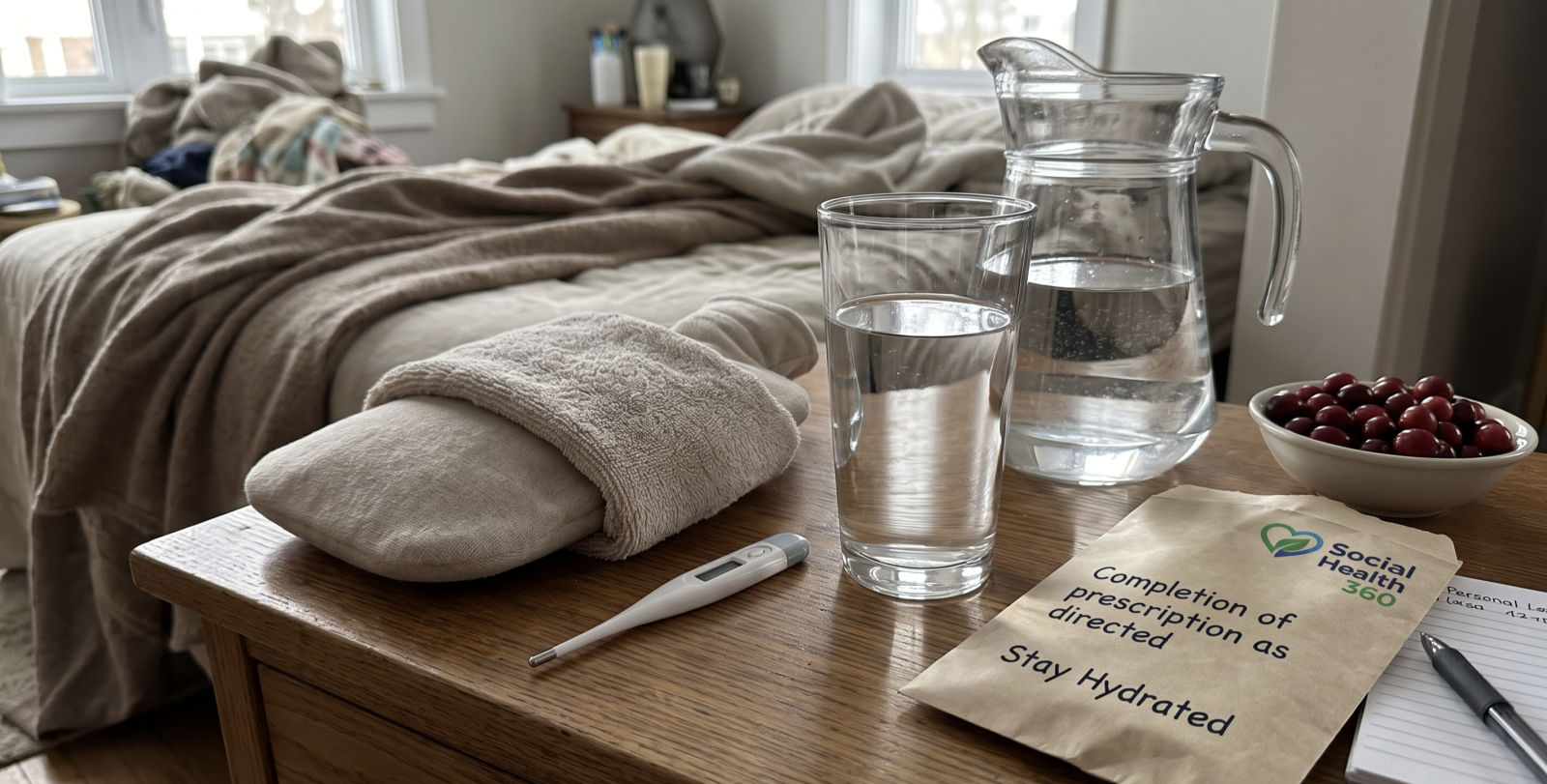
- Drink plenty of plain water: Sipping water steadily throughout the day dilutes your urine, making it sting less when you pee and helping flush bacteria out of the bladder.
- Use a warm heating pad: Placing a warm heating pad or hot water bottle (wrapped in a towel) over your lower belly for 15 to 20 minutes helps relax bladder spasms and relieve pelvic pressure.
- Avoid bladder irritants: Temporarily skip coffee, alcohol, spicy foods, artificial sweeteners, and fizzy drinks, as these irritate an already inflamed bladder lining.
- Short-term pain relief: Standard over-the-counter paracetamol (acetaminophen) or ibuprofen—if safe for your stomach and kidneys—can ease pelvic ache while prescription treatment starts working. Always follow the package label or your doctor's advice.
- Ask about urinary alkalizers or phenazopyridine: In India, doctors sometimes recommend potassium citrate or sodium bicarbonate syrups to reduce urine acidity, while in the US, over-the-counter phenazopyridine numbs urinary tract pain for up to 2 days (turning urine bright orange). These soothe symptoms only—they do not cure the infection.
When to See a Doctor
Contact a healthcare provider whenever you suspect a UTI, especially if it is your first one or symptoms last more than 24 hours. Seek immediate urgent medical care if you develop any of these red-flag warning signs:
- Signs of a kidney infection: High fever (above 101°F or 38.3°C), shaking chills, persistent nausea or vomiting, or sharp pain in your lower back or side just under the ribs.
- Visible blood in urine: Bright red or tea-colored urine, or passing blood clots.
- Inability to urinate: Severe straining or complete inability to pass urine despite a full bladder.
- High-risk groups: You are pregnant, male (UTIs in men are less common and always require evaluation for underlying causes), have diabetes, have a weakened immune system, or have a history of kidney disease.
- No improvement: Symptoms do not start improving within 48 hours of starting prescribed treatment.
How to Prevent Repeat UTIs
If you are prone to bladder infections, small everyday habits can significantly lower your odds of another flare-up:
- Stay consistently hydrated: Aim for pale-yellow urine throughout the day.
- Do not hold your urine: Empty your bladder every 3 to 4 hours and whenever you feel the urge.
- Wipe front to back: After using the toilet, always wipe from front to back to keep bowel bacteria away from the urethra.
- Pee after sex: Emptying your bladder soon after sexual intercourse helps flush out bacteria that may have entered the urethra.
- Skip scented feminine products: Avoid douches, scented sprays, bubble baths, and harsh soaps around the genital area, which disrupt healthy protective flora.
- What about cranberry products? Major reviews, including Cochrane analyses and urology guidelines, note that cranberry juice or standardized supplements may modestly reduce repeat UTIs in some women by preventing bacteria from sticking to the bladder wall—though they cannot cure an active infection, and sweetened cranberry cocktails add unnecessary sugar.
For related guidance on staying hydrated and using fever or pain relievers safely, read our articles on Oral Rehydration Salts (ORS) and safe hydration and paracetamol (acetaminophen) safe dosing.
The Social Health 360 Take
A urinary tract infection is uncomfortable and disruptive, but it is also one of the most treatable infections when addressed promptly. Pairing generous water intake with a timely urine check and a full course of prescribed medicine clears most bladder infections within days—and prevents a simple annoyance from traveling up to the kidneys.
Frequently Asked Questions
1. Can a mild UTI go away on its own without medical treatment?
While a small percentage of very mild bladder irritation episodes improve with heavy hydration alone, untreated bacterial UTIs frequently persist or spread upward to cause a serious kidney infection. Getting a quick urine check and appropriate prescription treatment is the safest approach.
2. Why do women get UTIs much more often than men?
Women have a shorter urethra (about 4 cm compared to roughly 20 cm in men), and its opening lies closer to the rectum, making it much easier for E. coli bacteria to reach the bladder. Hormonal shifts during pregnancy and menopause also affect urinary tract defenses.
3. Is a UTI contagious or sexually transmitted?
No. A UTI is not a sexually transmitted infection (STI), and you cannot catch it from a toilet seat or pass it directly to a partner. However, sexual activity can introduce your own skin or bowel bacteria into the urethra, triggering an infection.
4. How soon after starting treatment will I feel better?
Most people notice significant relief from burning and urgency within 24 to 48 hours of starting targeted antimicrobial medicine. Even when you feel completely normal, finish every remaining dose prescribed by your doctor.
5. What should I do if I keep getting UTIs several times a year?
Experiencing two or more UTIs in six months, or three or more in a year, is considered recurrent UTI. See a doctor or urologist to rule out kidney stones, incomplete bladder emptying, or hormonal changes, and to discuss tailored prevention options.
This article is for education only and is not medical advice. Talk to a qualified doctor or pharmacist about your own situation.